

What is Getting "Into the Zone" in Street Photography?
Taking your Street Photography to the next level with getting "Into the Zone" techniques explained!

What is meant by the term “*Getting into the Zone*” in Street Photography. What’s it all about and can it transform your street photography. This is a follow on Post from the Getting your Creative mojo back which is more relevant to Fine Art Street Photography.
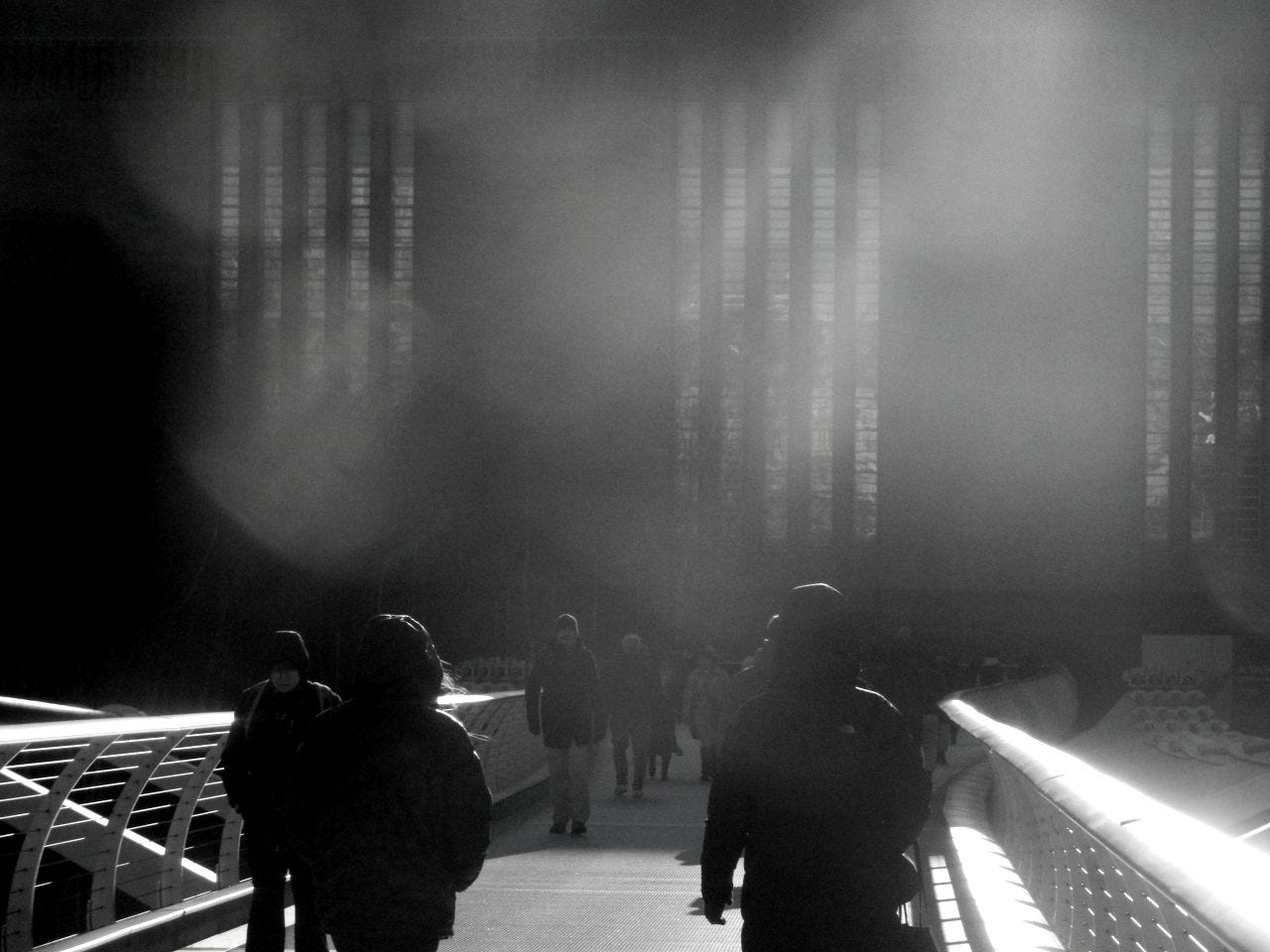
PHOTO: above a random warm up shot taken on the Millenium Bridge near Tate Modern just getting into the zone.
Fine Art Street V Street Photography
With Fine Art Street Photography you are more concerned with line, shape, form, texture, light and shadow looking at the streets in a more creative and artistic way. A different sort of discipline will be at play with Pure Street Photography you are documenting, you are capturing moments, capturing characters, you are trying to capture these split second moments most people would miss.
To get those sort of shots you have got to get into what is called “the Zone” by people in Street Photography circles where you are in a heightened state. You are not walking around with a camera in a casual manner seeing the world as everybody else sees it, instead you are in this hyper state where you are on the alert and start to see things that most people will not see, looking for just the slightest thing and anticipating these moments which can be micro seconds in duration and catching that moment at the peak moment in time.
Go past that moment and the moment has gone, capture before and the moment is just forming but just hinting at what is to come as in the peak moment in time. To see and react and capture these moments you need to be in a heightened state.
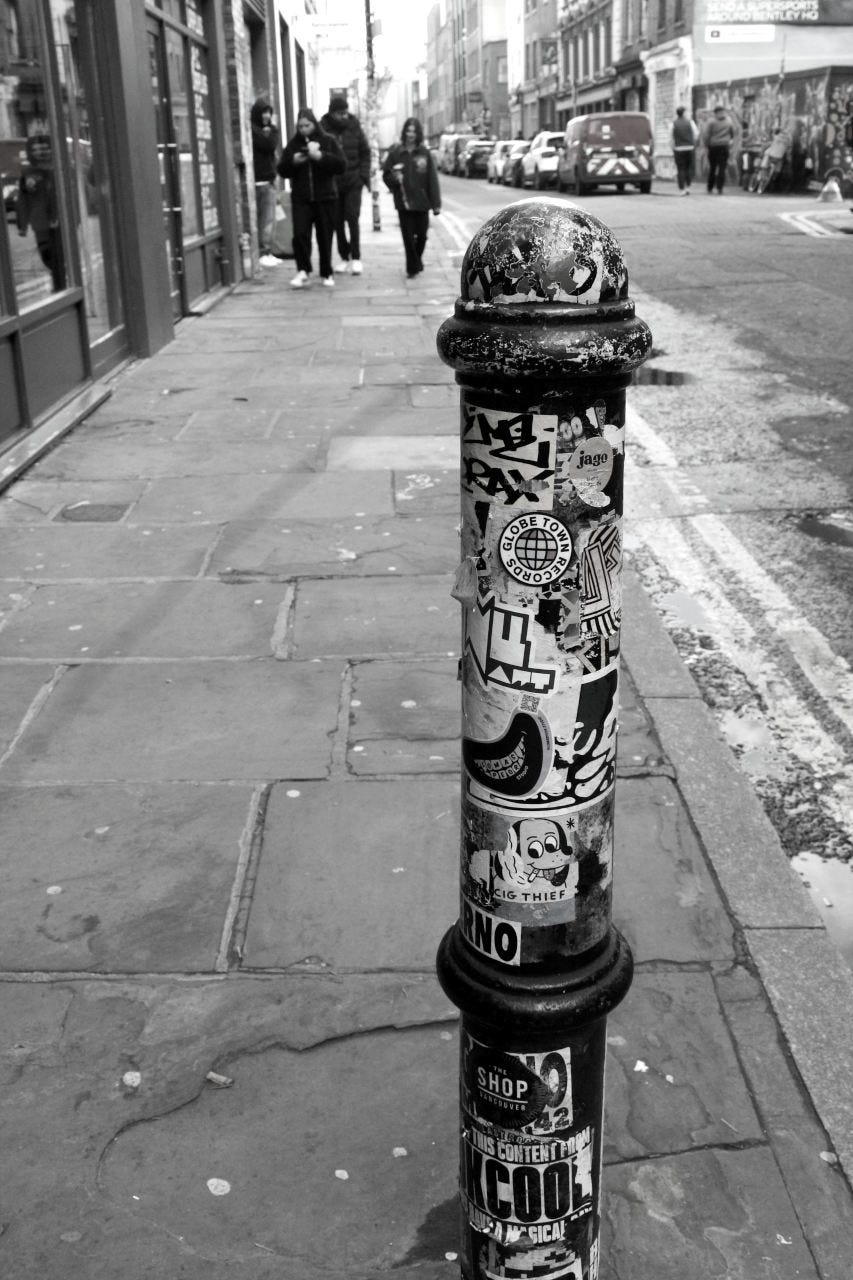
PHOTO: A random warm up shot of a Bollard in Shoreditch, Central London
Car Engines and Athletes?
Street Photography and the zone is very similar to Car Engines and Athletics or Sports. Car Engines perform at their best when they have been warmed up and don’t run so well when cold. The same thing can be applied to Athletics and Sports. You don’t just turn up at the starting blocks and then off you go there is normally some sort of preparation before hand where you have physically “warmed up” and also psychologically got yourself psyched up for the task in hand. It’s no difference in Street Photography but there is no athletic performance involved you are just walking with some body movements, it’s more a mental thing and what I call “the fight or flight” mode but just one level down from that. Street Photography is not a life or death situation it is one level down from that. To get to that heightened alert state, just like the car engine or the athlete you have to gradually warm up.
How I Get into the Zone
My personal approach which is totally out there. When you first arrive on the streets COLD, to get warmed up start taking photos of ANYTHING and I mean ANYTHING. Drains, Macro Shots of Double Yellow lines capturing the texture of the paint?, peoples Shoes, stick your camera in a shop window and take a couple of randoms, roof tops, car bonnets or headlights, puddles, graffiti or just running through a crowd taking some pure randoms, low down shots, high up shots, crank the iso to crazy high levels, , maybe just shoot at a shutter speed of 1/2 second on others..... in fact anything you can think off.
Get yourself trigger happy and what I like to call “loosened up” and more importantly “Warmed Up”. These will be mostly if not all dead shots. It helps if you are shooting digital and have at least one spare battery.After 5 or 10 minutes I would say maximum half to 1 hour of this.............. you may have something there but the chances are you will probably have nothing. The whole point of the exercise is not to get anything but to get WARMED up and reach a more heightened state where you are approaching “The Zone” where you are taking photos at your optimum performance level.
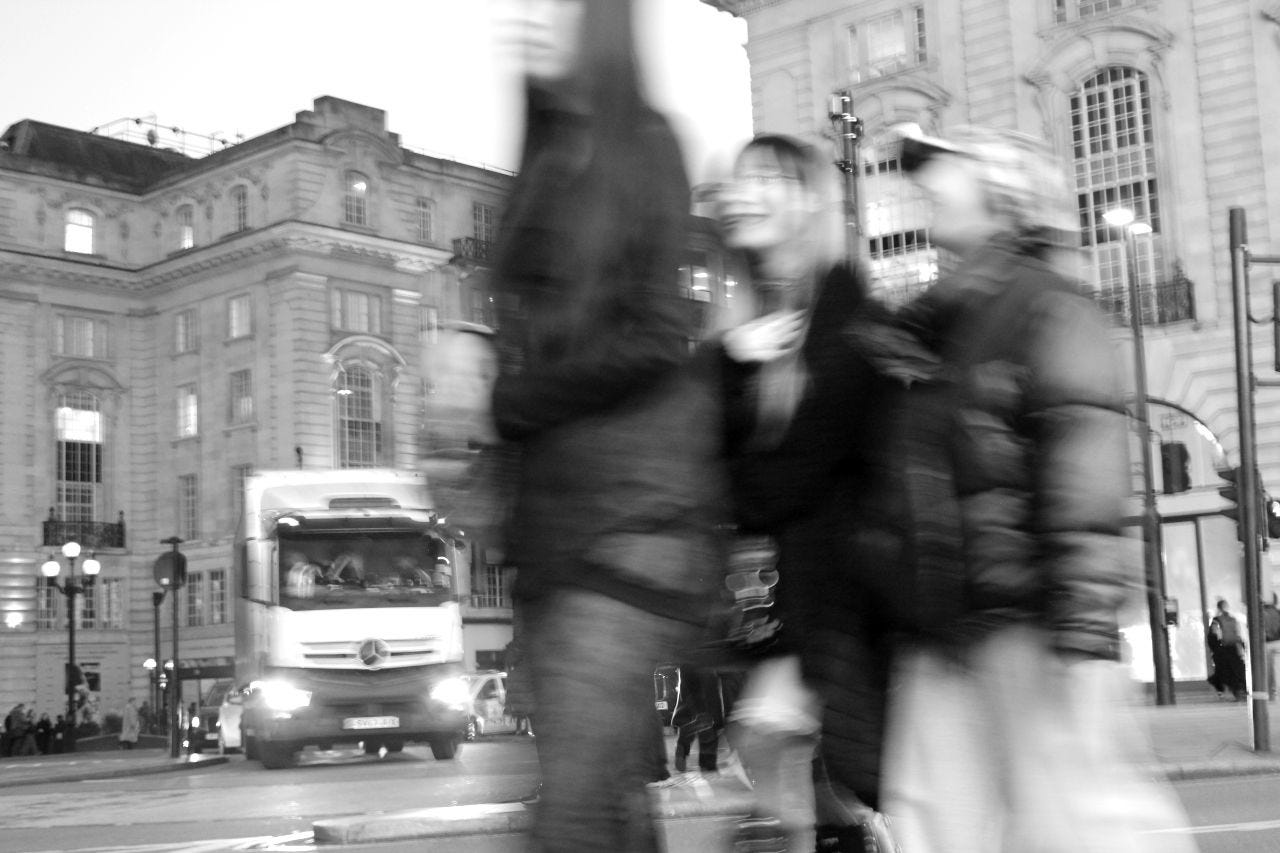
PHOTO: Random warm up shot of some tourists Piccadilly Circus, London with no awareness of shutter speed
Once you are in “The Zone”
THEN once you have got yourself warmed up, get your settings back to what you normally use say F8, at least 1/250 sec shutter speed and ISO whatever I shoot normally 1600 on most days. Delete the photos that are no hopers which will probably be most of them. With film this will be different but maybe try taking photos with your mind to get you warmed up instead. Then you start shooting proper.... looking for moments, looking for characters and looking for those little things that most people are too busy to notice and miss.
Shooting “warm and loose” as opposed to “cold and rigid”
With this technique you will not be shooting cold and rigid you will be shooting warm and loose and it makes a huge difference. You are relaxed but in this heightened state. If you are operating at an EXTREMELY heightened state people will see you coming towards them and alarm bells will start ringing, women in particular will react accordingly thinking there is something wrong with this person and you will get nothing. When you are in that sort of hyper alert state you look like you are running from something or look a bit shifty.
Take this down a notch and you are just one step away from that, you appear on the outside relaxed but inside you are hyped up ready for capturing moments, nano seconds, strange characters, micro events, anything out of the ordinary. Most importantly when in this state you are seeing what most normal people don’t see, some split second moment with some connection between foreground and background and maybe a few elements in the frame inter connected just at that moment in time, that’s what makes a good street photo and to capture that you have to be in “The Zone”.
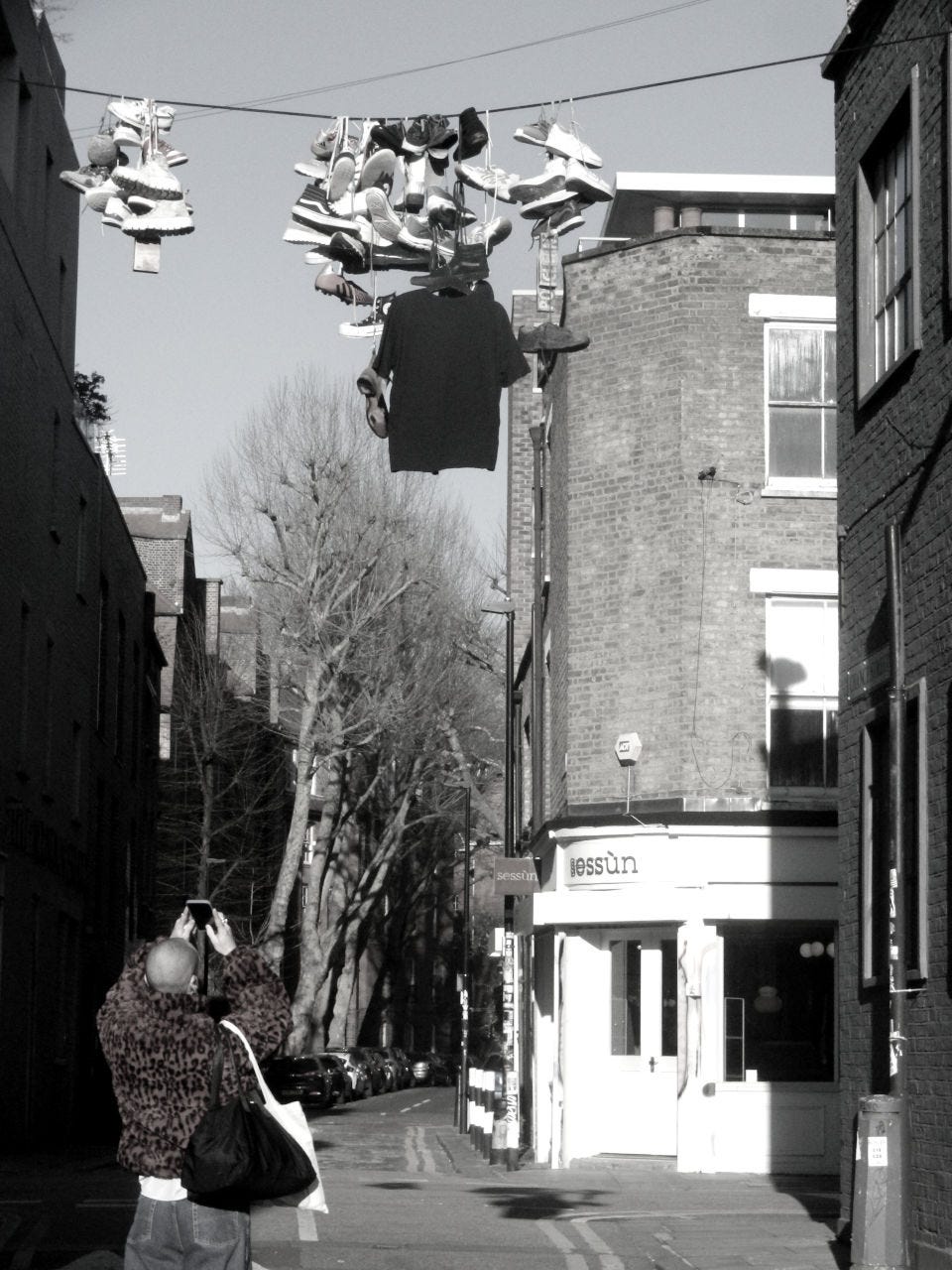
PHOTO: A Random warm up shot of somebody taking a shot of the famous suspended trainers in Redchurch Street, Shoreditch
How long to get into “the Zone”?
Just like an athlete and just like a car engine as a photographer you have to warm up to reach that heightened state. For some people it can be as quick as a couple of minutes, some maybe half an hour or an hour. It varies from person to person and from day to day. Once you are in the zone you may take 30, 50 or 100 photos, some possible bangers may be in there... maybe not but these photos will be vastly superior to the shots that you would take if you just started from cold. This heightened state you can’t keep going all day long, more in bursts throughout the day. In between I normally have a break, or try standing in one spot and get shots that way, or maybe try more experimental shots just something different.
Word of warning!
If you stay in that heightened state which is one step away from the “fight or flight” response which is designed to confront danger or get away from danger, it’s designed to be endured for a short period of time, minutes at most. If you keep that level going for long periods of time it is mentally and physically exhausting. In summary you need to get yourself on a cliff edge or knife edge but one notch down from that so you blend into the crowd and people feel comfortable when you are around taking photos.
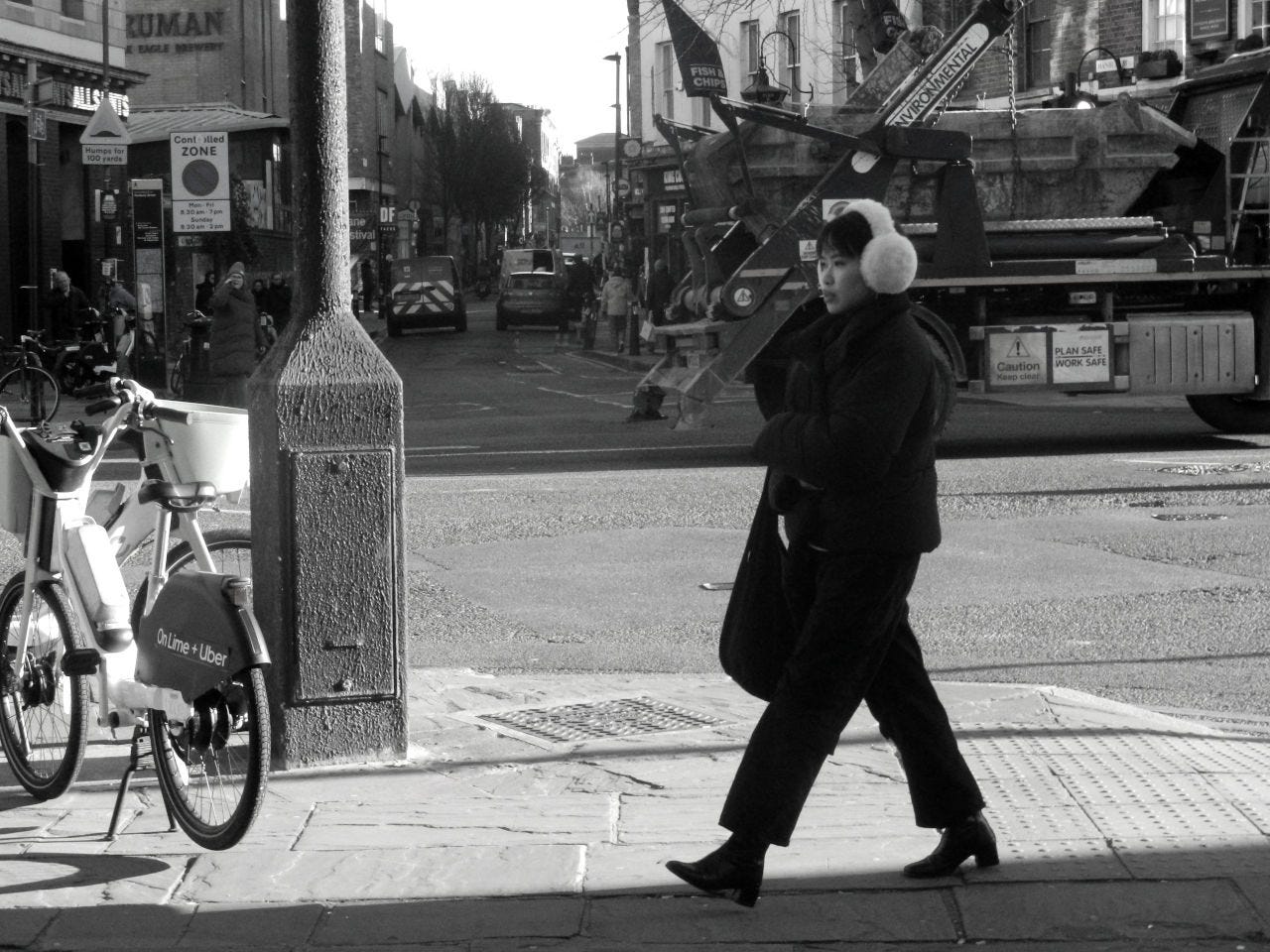
Random warm up shot of a woman with ear muffs walking down Old Street near Shoreditch. Absolutely no thought to composition background or anything. Loose and Free and Nice and cluttered????
“In the Zone” in Action
A video I recommend, but note this guy uses a small camera (I think Ricoh GR3) is Aaron Berger on the Paulie B Channel video below.
All shot on the streets of New York. His pictures for me personally are mainly good but some are exceptional with people jumping off walls in New York in mid flight, he has shots where you would have to be hyper alert to get that shot or in “the Zone” and anticipate that situation. His street photography technique is what I call “the combine harvester” approach but you need a small camera for that...... something light and dainty and small form factor it would be much harder with a DSLR or decent sized mirrorless.
A Ricoh GR3 looks like a toy, a DSLR held up at eye or shoulder level waving it around like a crazy thing is going to create a completely different scenario. Check out his website at aaron-berger.com and you will see the result of his efforts. In the video you see him he is hyper alert but is also hyper relaxed and he just blends into the crowd and nobody takes any notice of him.In 4, 5 or 6 hours he will probably take a huge number of photos especially somewhere like New York, but will probably end up with a handful of decent photos and maybe just maybe the possibility of that elusive “banger” moment.
Conclusion
In summary just like a car engine and just like an athlete you have to get yourself into a state of peak or optimal performance before the task in hand. The only difference with Street Photography is it’s not a sprint and not even a marathon it’s more like say a 5000m race, some speed but a certain amount of pacing involved otherwise you will just burn out before the day has even finished. Ultimately the aim for Street Photography is to make it as enjoyable and productive as possible. When you go out again you are going to look forward to going out....and that’s what it is all about. The more time you spend out there the more photos you will get which increasess the chances of getting those exceptional shots that prove so elusive.
So have you got any decent street shots for this article instead of not great warm up shots? Head over to this video Street Moments at Pavement Pulse on You Tube below.
What are your warm up techniques or do you just dive in from cold?
Latest London Street Photography Projects:
Shadow and Silhouettes: Fine Art Street Photography
Rain and Water: Fine Art Street Photography
Black and White London Street Photography
Light and Shadow: Fine Art Street Photography
Reflections Fine Art Street Photography
Abstract and Experimental Fine Art Street Photography